Showing posts with label recycling. Show all posts

9.17.2011

What can you do with your old newspapers? How about flip flops (or paperflops..)

Don't believe it? Check out Paperflops, flip flops that are made from entirely natural and biodegradable materials.This is not just a great idea, but also a great example of upcycling.

According to Paperflops, which is based in Indonesia, these Flip Flops are made of recycled and up-cycled newspapers. It takes approximately 1kg of old newspapers to produce a pair of PaperFlops Flip Flops. Other materials for the PaperFlop Flip Flops include root from old palm trees, coconut shells, and 100% natural rubber. The PaperFlop Flip Flops are quite durable and water proof since they are protected with a natural rubber sealant. 

Here are some more details about Paperflops from Ulule:

PaperFlops is a creative workshop that employs underprivileged people including street children and disabled people throughout Yogyakarta, Indonesia. This workshop trains and educates these people in arts and crafts to creating amazing products so they can be entirely self-sufficient.
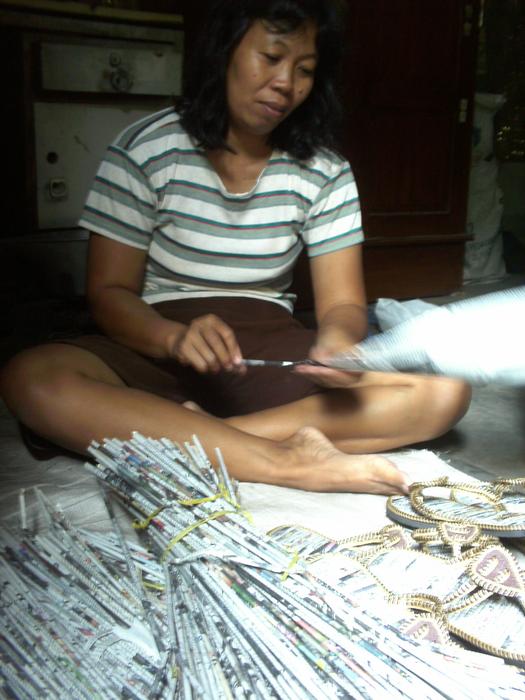


The workshop creates various unique handmade products made from recycled and up-cycled newspapers and other natural materials. All of the materials used in our workshop are environmentally friendly and sustainable. The products produced in our workshop include flip flops, sandals, bags, pencil boxes, and more.

The PaperFlops flip flops exist in different models and of course different sizes.It seems according to Ulule, where Paperflops were looking for funding couple of months ago, that their price is between $50-$60 including shipping, but it's not really clear where and how you can order them right now. If you want a pair, you might want to email Paperflops at thepaperflops@gmail.com to get more details.

Photos credit: Ulule


3.19.2011

Comparing between the iPad and the iPad 2 from a green perspective

Last week the environmental report of the iPad 2, where we learned that its carbon footprint is 105 kg CO2e, a reduction of 19.2% comparing to the footprint of the first model.

On Tuesday we started to look into the new report and showed what it means in terms of breakeven point with paper books.
Today, in the second part of our analysis, we try to find out what the real "green" differences between the two models of the iPad are.

We'll look at each of the components of the
life cycle analysis that Apple did to determine the carbon footprint of the iPad and the iPad 2 - production, transport, customer use and recycling. We'll also look into other specifications that Apple emphasizes on its report.

Production:

Carbon footprint of the iPad - 75.4 kg CO2e
Carbon footprint of the iPad 2 - 63 kg CO2e

Change: -16.4%


The iPad 2 is thinner and lighter than the original iPad. In terms of materials Apple mentions that "iPad 2 is even more material efficient than the original iPad, consuming up to 18 percent less material. The chart below details the materials used for iPad 2."

Here you can see the materials used for the iPad 2 (source: Apple's report):

And here are the materials used for the first iPad (source: Apple's report)

Here's a comparison of the data presented in these graphs (weight, in grams):


iPad iPad 2 Change
Display 155 140 -9.7%
Plastic 55 17 -69.1%
Other metals 40 25 -37.5%
Circuit boards 45 38 -15.6%
Glass 155 105 -32.3%
Battery 155 130 -16.1%
Aluminum
125 135 8.0%

It's interesting to see that the biggest changes are with the plastic and other metals and also that unlike the other components, the usage of aluminum actually increased in the iPad 2 in 8%. I believe that the efficient use of materials is the main reason for the reduction in the production's footprint. I also believe that this is also a place where Apple actaully saved money while reducing its product's carbon footprint.

Transport:
Carbon footprint of the iPad - 14.3 kg CO2e
Carbon footprint of the iPad 2 - 10.5 kg CO2e

Change: -26.6%


There's no explanation in the report where this reduction is coming from. One option this reduction is due to further efficiency in packaging - iPad 2 retail packaging consumes 51 percent
less material, which allows "up to 38 percent more units to be transported in an airline shipping container compared with the original iPad".

Apple also mentions that"the packaging for iPad 2 is highly recyclable. It uses corrugated cardboard made from a minimum of 28 percent post-consumer recycled content, and molded fiber made entirely from recycled content."

On the report of the first iPad, Apple wrote: "The packaging for iPad is almost entirely recyclable and uses corrugate cardboard made from a minimum of 33 percent post-consumer recycled content. In addition, its packaging is extremely material efficient, allowing more units to be transported in a single shipping container. "

As you can see, the percentage of post-consumer recycled content in the corrugated cardboard actually dropped from 33 to 28, although with the iPad 2, Apple mentions that the molded fiber made entirely from recycled content whereas in the first report it doesn't mention this fiber at all.

Alternatively, maybe Apple started using hybrid trucks?

Customer use
Carbon footprint of the iPad - 39 kg CO2e
Carbon footprint of the iPad 2 - 30.45 kg CO2e

Change: -21.9%


Apple is presenting in the reports information on the energy efficiency usage, which should be the most relevant component to this part:

Energy efficiency in the iPad 2:
iPad 2 uses power-efficient components and software that intelligently manages
power consumption. In addition, the iPad 10W USB Power Adapter outperforms the
stringent requirements of the ENERGY STAR specification for external power supplies.
The following table details the power consumed by iPad 2 in different use modes.

Power Consumption for iPad 2 (Wi-Fi + 3G)
Mode 100V 115V 230V
Sleep 0.46W 0.41W 0.45W
Idle—Display on 3.10W 3.08W 3.16W
Power adapter, no-load 0.07W 0.07W 0.09W
Power adapter efficiency 80.9% 80.8% 79.9%

Energy efficiency in the first iPad:
iPad uses power-efficient components and software that intelligently manages power consumption. In addition, the iPad 10W USB Power Adapter outperforms the stringent requirements of the ENERGY STAR specification for external power supplies. The following table details the power consumed by iPad in different use modes.

Power Consumption for iPad (Wi-Fi + 3G)
Mode 100V 115V 230V
Sleep 0.42W 0.43W 0.41W
Idle—Display on 2.97W 2.96W 3.04W
Power adapter, no-load 0.07W 0.07W 0.09W
Power adapter efficiency 80.9% 80.8% 79.9%

I have to admit that I am not sure yet how this data, showing relatively modest power consumption reductions is translated into a 22% reduction in the carbon footprint of customer use. Did I miss something here?

Recycling:
Carbon footprint of the iPad - 1.3 kg CO2e
Carbon footprint of the iPad 2 - 1.05 kg CO2e

Change: -19.2%


In both cases Apple offers the same description:
Through ultra-efficient design and use of highly recyclable materials, Apple has minimized material waste at the product’s end of life. In addition, Apple offers and participates in various product take-back and recycling programs in 95 percent of the regions where Apple products are sold. All products are processed in the country or region in which they are collected. For more information on how to take advantage of these programs, visit www.apple.com/environment/recycling/.

Strangely, if you go to this webpage, you will find that Apple has no mention of the iPad there, but only computers, displays, iPods and mobile phones. Even if we assume that the iPad has similar recycle offering as the iPod (and I have to say I'm not so sure about it), it's still far from being convenient or attractive - you can either send your old device by mail or bring it to one of Apple's stores and get 10% discount when purchasing a new one. So the bottom line is that Apple, even though it minimize the material waste by using materials more efficiently still doesn't make a real effort to make sure the first model or the second model of the iPad won't end their life eventually in the landfill.

Apple's commitment to the environment:

There's an introduction to the report where Apple is emphasizing its commitment imporving the environmental performance of its products. This part (see below) hasn't changed and the text in the iPad 2 report is identical to the text in the iPad report.


Apple believes that improving the environmental performance of our business starts with our products. The careful environmental management of our products throughout their life cycles includes controlling the quantity and type of materials used in their manufacture, improving their energy efficiency, and designing them for better recyclability.


Restricted substances:

Comparing between the two reports, we find this part identical. In both cases Apple mentions that "
Apple has long taken a leadership role in restricting harmful substances from itsproducts and packaging. As part of this strategy, all Apple products comply with the strict European Directive on the Restriction of the Use of Certain Hazardous Substances in Electrical and Electronic Equipment, also known as the RoHS Directive. Examples of materials restricted by RoHS include lead, mercury, cadmium, hexavalent chromium, and PBB and PBDE brominated flame retardants (BFRs)."

According to the reports, both the iPad and the iPad 2 go even further than the requirements of the RoHS Directive by incorporating the following more aggressive restrictions:
• Mercury-free LED-backlit display
• Arsenic-free display glass
• Brominated flame retardant (BFR)−free
• Polyvinyl chloride (PVC)−free

General green specs:
Apple is providing a summary of the "green" specs in each report under "Environmental Status report". This report is identical for both models and include the following:

• Arsenic-free display glass
• Brominated flame retardant-free
• Mercury-free LED backlit display
• PVC-free
• Recyclable aluminum and glass enclosure
• Power adapter outperforms strictest global energy efficiency standards

And finally, here's a summary of the changes in the carbon footprint of each component:


iPad iPad 2 Change
Production 75.4 63 -16.4%
Transport 14.3 10.5 -26.6%
Customer use 39 30.45 -21.9%
Recycling 1.3 1.05 -19.2%
Carbon footprint: 130 105 -19.2%

More resources on how green is the iPad can be found on our website at www.ecolibris.net/ipad.asp

More resources on the ebooks vs. physical books environmental debate can be found on our website at www.ecolibris.net/ebooks.asp.

Yours,
Raz @ Eco-Libris

Eco-Libris: Promoting sustainable reading!

2.01.2011

The State of Green Business 2011 - good news when it comes to paper intensity and recycling

Today, GreenBiz.com are publishing the State of Green Business report for 2011, which is defined as "their annual effort to take the pulse of what and how the world of sustainable business is doing." We simply call it the best report available on green business.

This report is looking into couple of issues that are related to our areas of interest, and this week we'll be looking into all of them, starting today with
paper.

The report, as Joel Makower chairman and executive editor of GreenBiz Group is writing today, includes mixed news, both good and bad developments in the green markets. Paper fortunately is one on the good side, presenting positive progress on two major fronts - paper intensity and recycling.

When it comes to paper intensity, we see a continuing trend of improvement. Paper intensity represents the amount of paper used per every unit of GDP (Gross Domestic Product). In other words, it shows how efficiently paper is used in the U.S. economy.
In terms of tons of paper per billion of dollars of GDP, paper intensity went down from 6.79 in 2008 to 6.13 in 2009. As you can see in the graph below (taken from the report, data provided by the American Forest & Paper Association), only couple of years ago we were in the range of 7-10, so this is definitely a significant improvement.

I guess it's not a big surprise to see this trend, especially when saving on paper is such a win-win strategy that help saving not just trees, but also a lot of money. Only last week the Environmental Leader reported that the "Bank of China’s London operations have reduced paper consumption by 95 percent with help from IBM", saving £12,000 a year on paper costs alone. I believe we'll hear more on companies that adopt similar practices (electronic routing and monitoring system in this case) to move one step further towards a more efficient and paperless office.

The big question of course is not what will happen in the US and Europe, where demand for paper will probably continue to decrease, but what will be with the demand in growing economies such as China and India. Will they use growing volumes of paper or use paperless leapfrog technologies
to promote their economic development.

When it comes to recycling we also see good results - The American Forest & Paper Association (AF&PA) reported that 63.4% of U.S. paper consumed was recovered in 2009. As you can see from the data they provide in the graph below, it continues a trend of growing recovery rate, and it is the first time this rate passed the 60%.

According to the report, "The American Forest and Paper Association, an industry group, estimates that once we reach about 80 percent over-all recovery, the remainder will be unfit for the reuse stream: Bath tissues and building papers alike pose challenges to recycling for both obvious and less obvious reasons." Even if it's true, I believe it makes more sense to find ways and technologies that will enable us to recycle (and even upcycle) more paper then to throw 20% of the paper volume to the trash. In any event, we're still far from reaching this ceiling and as the report explains there's still much to be done about recycling:

But there is still room for improvement, and while businesses have led the charge in making
the corrugated fibers that go into shipping products the most-recycled type of paper around, other areas of business use are lagging. For example, despite the seeming ubiquity of the blue recycling bin in offices nationwide, office and writing papers remain the least-recycled.

So good news about paper and we hope these trends will continue in the upcoming years, with or without the support of carbon regulation (hopefully with, as it will make it much simpler..). More updates from the State of Green Business report in the upcoming days. In the meantime, you can download the free report from GreenBiz.com.

Yours,
Raz @ Eco-Libris

Eco-Libris: Promoting sustainable reading!

4.12.2010

RecycleBank's 10 Ways to Reduce Waste, Save Energy and Protect the Earth

Earth Day is just a week away and in honor of the 40th Anniversary of Earth Day, our friends at RecycleBank has put together 40 simple yet effective ways to reduce waste, save energy, trees, and other resources, and help fight pollution and curb climate change all Earth Month long.

Below are the first ten tips. Each week during Earth Month, RecycleBank will post ten new tips online.


1. You'll be more likely to recycle consistently if you set up a recycling area in your kitchen or utility room. Post a list nearby of the items that are accepted for recycling in your local community.


2.Reuse or recycle as many of your empty health and beauty product containers as you can. If you can’t reuse them at home, containers such as your empty vitamin or supplement bottles can be recycled with your home recycling. Other cosmetic and toiletry tubes, bottles, and jars (from any brand) can be taken back to retail stores including Origins and MAC.

3. Choose toilet paper made from 100% recycled fibers. According to the Natural Resources Defense Council, if every household in the U.S. replaced one roll of virgin fiber toilet paper with 100% recycled ones, we'd save 423,900 trees.

4. When decorating your home, choose items made from reclaimed materials - for example, a recycled glass vase from RecycleBank rewards partner Uncommon Goods, a rug made from old cotton t-shirts, or a basket made from telephone wire. It saves resources and extends the useful life of the materials.

5. Find out how to recycle items that you can't place in your curbside bin like batteries, compact fluorescent light bulbs, and plastic bags. When in doubt, call your local solid waste management agency or go to earth911.org.

6. Leave grass clippings on the lawn after you mow rather than bagging and throwing them away. This saves energy and landfill space and the grass will decompose and return nutrients to the soil.

7. Got an old fur coat or hat in the attic that you inherited and never wear? Donate it to the Humane Society of the United States' Coats for Cubs program so wildlife rehabilitators can reuse it as bedding for injured or orphaned wildlife.

8. After birthday and holiday celebrations, save gift bags and boxes, ribbons, and tissue paper to reuse.

9. Recycle plastic packing peanuts by saving them for the next time you send a package, taking them to any UPS Store location, or calling the Plastic Loose Fill Council's 24-hour Peanut hotline (800-828-2214) to find other drop-off sites near you.

10. Invest in a set of rechargeable batteries and a charger for powering your digital camera, portable music player, remote control, and other gadgets. You'll reduce waste, save resources like steel, and save money in the long run.

Yours,
Raz @ Eco-Libris

Eco-Libris: Promoting sustainable reading!